



Key Takeaways
- Interactive exhibits greatly improve visitor participation and comprehension.
- Modern technology, including VR and AR, drives a new era in museum curation.
- Collaborative efforts are essential for sustainable cultural preservation.
Table of Contents
- Introduction
- Enhancing Visitor Engagement
- Technological Innovations in Museums
- Case Studies of Interactive Exhibits
- Challenges and Considerations
- Future Directions
As digital technology continues to transform our daily lives, museums and cultural institutions are seizing new opportunities to revitalize and protect historical artifacts and traditions. Interactive exhibits have emerged as a powerful tool, bridging generations and fostering meaningful connections between audiences and cultural narratives. For visitors seeking hands-on engagement, destinations like Landis Valley Village exemplify how immersive environments can turn the act of museum-going into an active learning adventure, bringing history to life.
This dynamic evolution goes beyond mere entertainment. By turning passive visitors into active participants, interactive exhibits ensure that diverse stories, skills, and objects endure, reaching wider and younger audiences who might otherwise overlook them. Technological enhancements benefit not only education but also accessibility, giving everyone the chance to experience, understand, and appreciate their shared heritage—regardless of their background or learning style.
Such innovation enlivens exhibits and expands outreach possibilities. Cultural preservation efforts that once relied solely on physical displays now harness the power of digital storytelling, real-time interaction, and collaborative exploration. These advancements highlight the pivotal role of technology in safeguarding traditions for future generations, all while remaining relevant to the digital age.
Crucial to this movement are partnerships between cultural institutions and technology providers. By leveraging cutting-edge tools, organizations foster greater community engagement, facilitate knowledge transfer, and underscore the importance of preserving our collective history for years to come.
Enhancing Visitor Engagement
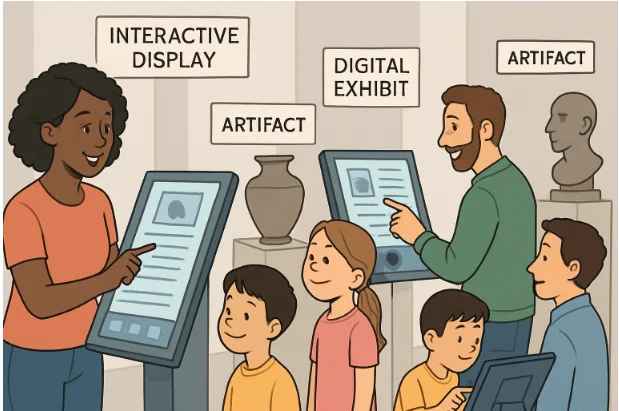
Moving beyond glass cases and static placards, interactive exhibits encourage visitors to experience history by touching, listening, seeing, and sometimes even creating alongside artifacts and stories. By blending educational content with multisensory interfaces, museums offer something for every age group and learning preference. This shift creates a more inclusive environment, helping individuals of varying abilities and backgrounds to participate fully.
Gamification, simulated environments, and participatory workshops all play a role. Activities such as reconstructing ancient pottery or solving digital puzzles related to historical events stimulate curiosity and help visitors retain knowledge. These connections nurture a lifelong appreciation for cultural heritage, extending the impact of museums far beyond their physical walls.
Technological Innovations in Museums
Today’s museums leverage breakthroughs in Virtual Reality (VR), Augmented Reality (AR), and interactive projection mapping to immerse visitors in new worlds. For example, the National Geographic Society’s planned Museum of Exploration in Washington, DC, will utilize Panasonic’s advanced projectors and digital canvas technology to craft stunning, exploratory environments. These settings allow visitors to delve into the journeys and discoveries that shaped our understanding of the world, blending real and virtual elements for deeper engagement.
Case Studies of Interactive Exhibits
Across the globe, institutions are harnessing tech to transform cultural preservation. In China, the Nanjing Museum’s adaptation of the venerable Kunyu Wanguo Quantu map into a VR experience enables immersive exploration of centuries-old cartography. Visitors navigate historic routes, watching maps come to life through interactive storytelling—a process that has boosted public interest in ancient artifacts and inspired new conversations around heritage protection. These success stories illuminate the path forward for museums everywhere.
For further reading on how digital experiences are altering the cultural landscape, see Smithsonian Magazine’s feature on museum technology.
Challenges and Considerations
Despite their many advantages, interactive exhibits are not without hurdles. Implementing sophisticated technology demands initial capital and ongoing maintenance, which may strain the budgets of smaller institutions. Moreover, ensuring universal access—including for visitors with disabilities or those without digital proficiency—remains an ongoing concern. Cultural organizations must balance innovation with their responsibilities as stewards, choosing tools and approaches that promote long-term sustainability and broad accessibility.
Future Directions
The next frontiers for interactive cultural heritage will be driven by artificial intelligence and adaptive experiences. By blending generative AI, AR, and gaming principles, emerging applications provide hyper-personalized tours and interactive scavenger hunts, tailoring content to each visitor’s interests and learning pace. This paradigm holds potential to enrich educational value and draw even wider audiences into the world of museums. Further research and collaboration will be key as institutions refine these models for effective, inclusive heritage preservation. A promising overview of this trend can be found at arXiv, exploring how generative AI is shaping the future of cultural exhibits.
Ultimately, interactive exhibits represent a transformative force in cultural heritage preservation. By skillfully weaving technology with tradition, museums ensure that the stories, artifacts, and teachings that define us can continue to educate, inspire, and connect communities well into the future.
