



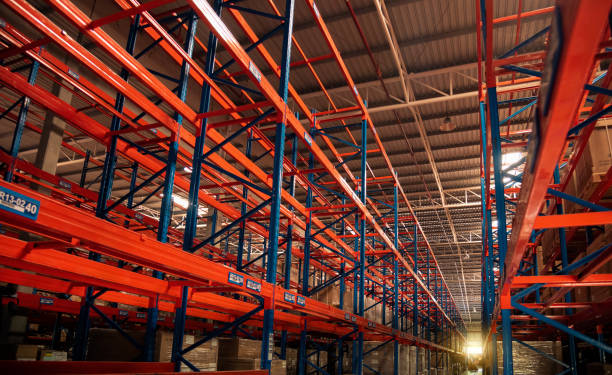
Picking the right racking system for your warehouse is super important. It helps you save space and work faster. However, with so many choices, selecting the wrong one can create significant disruptions and impede efficiency.
Have you ever pondered whether your racks are genuinely serving their intended purpose? The appropriate racks influence stock management, safeguard your workers, and impact the speed at which you process orders.
Let’s explore how to find the perfect racking system that fits your warehouse needs.
Understanding Your Storage Needs
Before you choose a racking system, first look at the types of products you’ll store. Think about their size, weight, and how often you need to move them. For instance, heavy machinery requires robust and durable racks, whereas smaller items are well-suited for compact racks.
Additionally, consider the frequency with which you access these products. Fast-moving items might be best suited for a selective rack, while slower-moving goods might benefit from a pallet flow system.
Types of Racking Systems available
Here are several popular racking systems you may consider:
Pallet Racking
This system is ideal for storing substantial quantities of pallets. It makes it easy to load and unload products quickly. It is particularly effective for warehouses handling bulk items.
Selective Racking
This type lets you access each pallet directly without moving others. It is perfect for warehouses storing a diverse array of products. You can swiftly locate and retrieve what you require.
Drive-In Racking
This system optimizes space utilization by minimizing the number of aisles. It’s designed for storing large quantities of similar items. Nevertheless, it requires meticulous management to maintain effective inventory tracking.
Push Back Racking
Products sit on carts that roll back as you add new items. This system is particularly effective for implementing a First-In, First-Out (FIFO) inventory strategy. It contributes to maintaining organization and efficiency.
Mobile Racking
These racks are mounted on tracks and can move to open or close aisles. This enables more efficient space utilization by reducing vacant areas. It’s a smart choice when space is tight.
Assessing Space and Layout
The layout of your warehouse is pivotal when selecting racks. Evaluate your floor space and inventory requirements.
While tall racks maximize space, they may require specialized equipment. Additionally, plan aisle width according to forklift usage to facilitate a smooth workflow and efficient material handling. Companies offering 3PL Product Fulfillment & Warehousing Solutions can also assist in optimizing storage design, ensuring both efficiency and scalability.
Building Safety and Compliance
Safety must always be the top priority when selecting a racking system. Every type of rack has its own weight limits and safety rules you need to follow.
Ensure that your system complies with local regulations to safeguard employees and prevent accidents. Investing in high-quality racks may incur higher initial costs, yet it protects your team and mitigates risks in the long term.
Getting Professional Help
If you feel overwhelmed by options, contemplating consultation with a warehouse racking specialist may be beneficial. They can offer insights tailored to your specific requirements, ensuring seamless integration of your new systems with current operations. A professional evaluation can save you time and money in the long run.
Making the Right Choice
Selecting the appropriate racking system extends beyond merely choosing shelving; it involves promoting efficiency, safety, and accessibility within your warehouse.By comprehending your storage requirements, assessing your space, and prioritizing safety, you can make a well-informed decision. Do not hesitate to reach out to professionals capable of guiding you through this process to significantly enhance your warehouse operations.
Is this article helpful? Keep reading our blog for more.
