



Table of Contents
- Introduction
- Regulatory Shifts in Labeling Standards
- Integration of Smart Labeling Technologies
- Emphasis on Sustainability in Labeling
- Personalization Through Variable Data Printing
- Enhancing Consumer Engagement with Augmented Reality
- Adoption of AI and Automation in Labeling Processes
- Conclusion
Introduction
The world of product labeling is undergoing a rapid transformation, driven by regulatory change, technological advancements, and growing consumer and environmental expectations. Navigating this shifting landscape is vital for organizations that keep pace with compliance and industry best practices. Companies are now investing in comprehensive solutions like Premises Labeling to maintain compliance and accuracy throughout their labeling processes. Keeping up with emerging trends isn’t just a matter of ticking boxes—it’s a strategic imperative for brand integrity and consumer trust.
As businesses operate globally, labeling compliance has never been more complex. From evolving food allergen regulations to adopting innovative labeling technologies and an industry-wide pivot toward sustainability, manufacturers, retailers, and regulators are rethinking product information delivery. These trends point to a future of transparency, accountability, and innovation.
Industry leaders recognize labeling as more than a regulatory requirement; it’s a direct link with consumers and a powerful signal of brand values and responsibility. With higher customer expectations for safety, transparency, and engagement, organizations must adopt holistic and agile labeling strategies to stay ahead. Failure to adapt can risk costly recalls, regulatory penalties, and brand damage, while those that innovate can boost efficiency, customer satisfaction, and loyalty.
This article examines the forces shaping tomorrow’s labeling compliance—from legislative updates to advances in tech and sustainability—offering insights and solutions for future-ready businesses.
Regulatory Shifts in Labeling Standards
In recent years, regulatory bodies have tightened labeling compliance across dozens of industries, notably food, pharmaceuticals, and chemicals. Agencies such as the U.S. Food and Drug Administration and the European Food Safety Authority now enforce more stringent allergen disclosure, nutrition facts, and ingredient sourcing protocols. For example, following several high-profile allergen incidents, the UK’s Food Standards Agency now recommends written allergen information for non-prepacked foods, elevating consumer safety and transparency standards.
These stricter guidelines demand that production lines adopt clear, comprehensive labels that are both legible and accessible. Compliance thus requires robust internal processes, ongoing staff training, and agile digital solutions capable of navigating evolving requirements. Failing to comply can incur regulatory penalties and damage consumer trust permanently. For a deeper look at recent regulatory shifts in Europe, visit Food Navigator’s analysis of EU labeling rules.
Integration of Smart Labeling Technologies
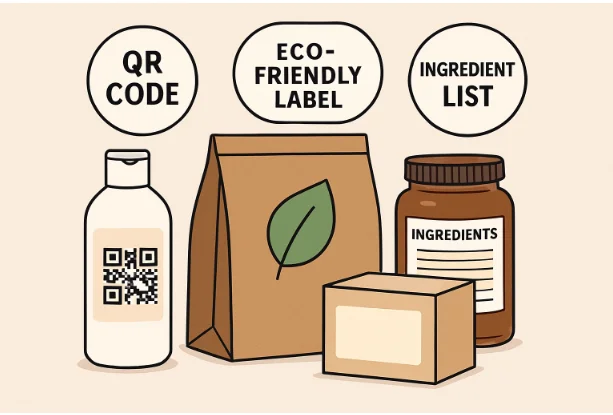
The days of static, one-dimensional labels are rapidly fading. Digital innovation has ushered in the era of smart labeling, utilizing QR codes, RFID tags, and NFC chips to bridge the gap between manufacturers, supply chains, and consumers. These technologies facilitate seamless traceability, enhance anti-counterfeiting efforts, and provide instant access to dynamic product information—from supply-chain origins to real-time recall alerts.
In sectors like food, electronics, and fashion, smart labeling also transforms consumer experiences. Scanning a QR code on packaging can reveal source locations, detail nutritional content, or verify a product’s authenticity. Businesses deploying smart labeling gain a valuable window into consumer behavior, helping them fine-tune offerings, reduce fraud, and streamline regulatory reporting. According to Forbes, smart labels are poised to become industry standard due to their traceability benefits and direct consumer connection.
Emphasis on Sustainability in Labeling
Global consumers are increasingly conscious of a product’s environmental impact, demanding sustainable packaging and labeling at every step. This has driven brands to switch to environmentally safe adhesives, biodegradable label stock, and linerless labels that reduce waste. Labels made from recycled, renewable, or compostable materials are now front and center, pushing the industry to rethink sourcing and manufacturing practices.
Sustainability doesn’t just appeal to eco-conscious customers—it’s also becoming embedded in new legislation. Many countries have set targets for green procurement and label recycling mandates to help lower overall industry emissions. Companies leading the way in sustainable labeling see improved reputations and access to new markets, while those lag behind risk regulatory action and consumer backlash. For more on sustainability trends, Food Navigator’s report on the European Union Deforestation Regulation (EUDR) provides an excellent perspective.
Personalization Through Variable Data Printing
Variable data printing (VDP) is fast redefining marketing and compliance for brands, enabling businesses to personalize each label within a production batch. This approach allows for serialized tracking codes on pharmaceuticals, region-specific languages on exports, and tailored promotions for target demographics—all executed at high speed and scale without disrupting production.
For consumer-facing products, personalization boosts customer loyalty and deepens engagement. In highly regulated industries, it ensures product authenticity, supports recalls, and provides clarity for end users—enhancing overall compliance. Leading manufacturers are increasingly investing in digital print technology to handle dynamic layouts seamlessly, keeping pace with the need for both regulatory precision and market differentiation.
Enhancing Consumer Engagement with Augmented Reality
Augmented reality unlocks entirely new dimensions for labeling, transforming a simple product label into a gateway for rich, interactive experiences. AR-enabled labels can bring static images to life, delivering everything from animated user guides to immersive brand storytelling or virtual product demonstrations.
These innovations do more than entertain—they educate consumers about sourcing, ingredients, and proper use while providing brands with direct channels for feedback and engagement. This two-way interaction strengthens the customer relationship and supports better-informed purchasing decisions. As AR-enabled packaging becomes more mainstream, brands that adopt it early stand out in crowded markets and foster stronger loyalty among tech-savvy consumers.
Adoption of AI and Automation in Labeling Processes
Artificial intelligence and automation revolutionize how labels are created, approved, and maintained. AI-powered systems now streamline regulatory checks, design optimization, and real-time error detection, making compliance more manageable across product lines and jurisdictions. These digital solutions can adapt label content in response to sudden regulatory updates or marketplace changes, ensuring accuracy and speed at scale.
The result is reduced risk of human error, faster time-to-market, and significant cost savings. Automation also enables data-driven insights for future improvement, flagging bottlenecks and capturing process data for compliance audits. As global regulation and market needs keep evolving, AI-driven labeling solutions will be crucial for businesses intent on scaling operations while minimizing risk.
Conclusion
A confluence of regulatory shifts, technological progress, and the urgent need for environmental stewardship influences the future of labeling compliance. Businesses that proactively invest in advanced labeling solutions, such as digital and sustainable technologies, can navigate changing rules more effectively and position themselves as leaders in transparency, safety, and consumer trust. By embracing these emerging trends, organizations set themselves up for long-term success in an increasingly dynamic regulatory landscape.
