



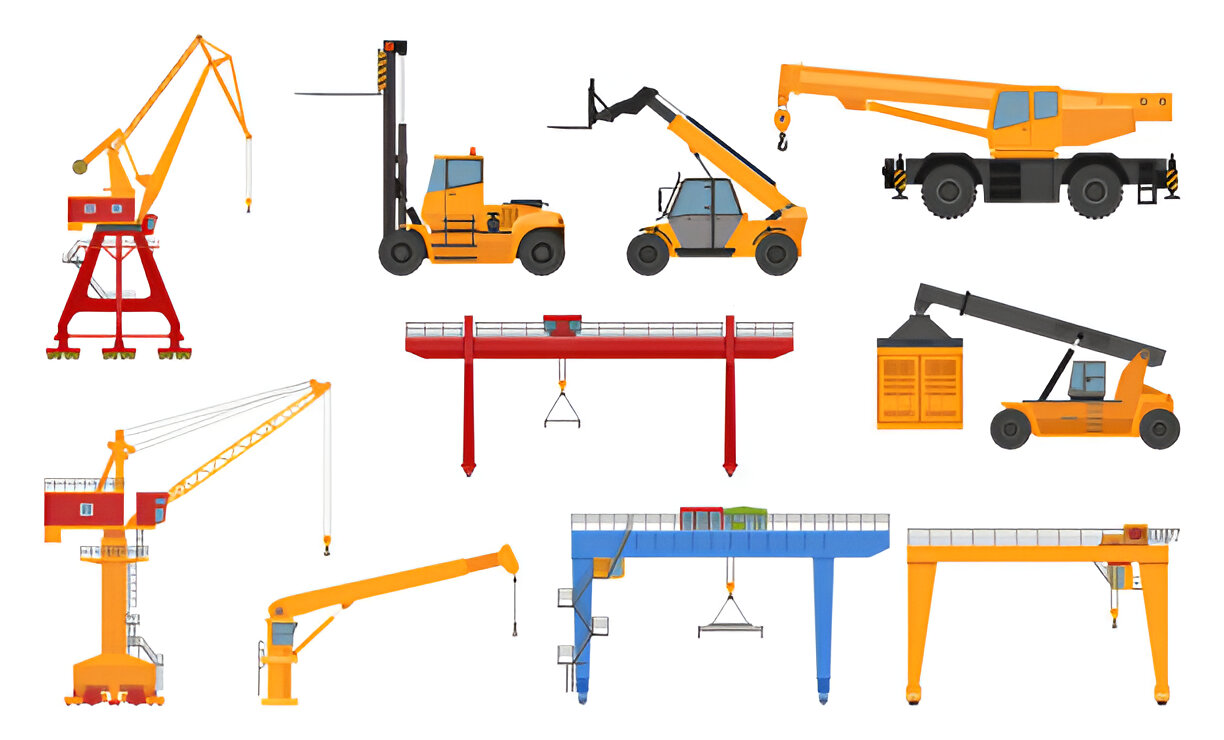
Heavy lifting machines are essential in construction, manufacturing, and logistics, enabling tasks like moving, lifting, and positioning materials that are impossible manually. From cranes to forklifts, each type of machine serves a unique purpose, improving efficiency and safety. This guide covers the four main categories of heavy lifting machines and their roles across industries.
Cranes: The Giants of Vertical Lifting
Cranes represent perhaps the most recognizable category of heavy lifting equipment, designed specifically for lifting and moving heavy objects vertically and horizontally across construction sites, ports, and industrial facilities.
Mobile Cranes
Mobile cranes offer exceptional versatility and can be quickly transported between job sites. These machines mount on wheeled chassis or crawlers, providing flexibility for projects requiring crane services across multiple locations. They excel in construction projects, emergency response situations, and any application where portability matters more than maximum lifting capacity.
Common mobile crane variants include truck-mounted cranes, rough terrain cranes, and all-terrain cranes. Each type addresses specific site conditions and mobility requirements, with truck-mounted models offering excellent road travel capabilities while rough terrain variants handle challenging ground conditions. For specialized needs, crane services like those in Utah can provide tailored solutions to match your project requirements.
Tower Cranes
Tower cranes dominate urban construction sites, providing impressive height and lifting capacity for high-rise building projects. These stationary machines anchor to concrete foundations or building structures, offering exceptional stability and the ability to lift heavy materials to significant heights.
Their fixed nature allows for precise positioning and consistent lifting capacity throughout extended construction periods. Tower cranes typically feature horizontal jibs that can extend far from the tower center, providing extensive coverage across large construction sites.
Overhead Cranes
Overhead cranes operate within buildings and covered facilities, running on elevated tracks or beams. These systems excel in manufacturing environments, warehouses, and industrial facilities where materials need consistent movement along predetermined paths.
Bridge cranes, gantry cranes, and jib cranes represent common overhead crane configurations. Each design addresses specific facility layouts and lifting requirements, with bridge cranes offering maximum coverage area and jib cranes providing focused lifting in smaller zones.
Forklifts: The Workhorses of Material Handling
Forklifts serve as indispensable tools in warehouses, distribution centers, and manufacturing facilities worldwide. These compact yet powerful machines specialize in lifting, moving, and positioning palletized goods and other materials at ground level and various heights.
Counterbalance Forklifts
Standard counterbalance forklifts represent the most common forklift type, using rear-mounted weights to balance loads carried on front-mounted forks. These versatile machines handle general material handling tasks across numerous industries, from loading trucks to stacking inventory in warehouses.
Electric and internal combustion engine variants offer different advantages, with electric models providing quiet operation and zero emissions for indoor use, while gas and diesel versions deliver greater power and extended operating ranges for outdoor applications.
Reach Trucks
Reach trucks excel in narrow-aisle warehouse operations, featuring extending forks and compact designs that maximize storage density. These specialized forklifts can operate in aisles as narrow as eight feet while reaching heights exceeding 30 feet, making them essential for high-density storage facilities.
Their precise controls and excellent visibility help operators safely navigate tight spaces while handling delicate inventory positioning tasks that require accuracy and finesse.
Order Pickers
Order pickers, also known as man-up forklifts, elevate operators along with their loads, enabling efficient picking operations in high-bay warehouses. These machines support e-commerce fulfillment operations and distribution centers where workers need direct access to inventory at various heights.
Different configurations include low-level order pickers for ground-level operations and high-level variants that can reach heights exceeding 40 feet, supporting efficient order fulfillment across various warehouse layouts.
Excavators: Masters of Earth Movement
Excavators combine powerful hydraulic systems with versatile attachments to handle digging, demolition, and material handling tasks across construction, mining, and landscaping applications.
Standard Excavators
Standard track-mounted excavators provide excellent stability and mobility across challenging terrain. These machines feature rotating upper structures that allow 360-degree operation without repositioning the base, maximizing operational efficiency on construction sites.
Size classifications range from mini excavators weighing less than six tons to large mining excavators exceeding 100 tons. Each size category addresses specific project requirements, with smaller units offering maneuverability in confined spaces and larger models providing maximum digging force and reach.
Wheeled Excavators
Wheeled excavators trade some stability for improved mobility, particularly on paved surfaces and urban job sites. These machines can travel between locations under their own power at highway speeds, reducing transportation costs and setup time.
Their rubber tires make them ideal for utility work, road construction, and projects requiring frequent relocation without damaging paved surfaces.
Long Reach Excavators
Long-reach excavators feature extended booms and arms that enable operation in challenging locations such as deep excavations, waterway maintenance, and demolition projects where standard excavators cannot safely operate.
These specialized machines excel in applications requiring extended horizontal reach while maintaining safe operating distances from hazardous areas or unstable ground conditions.
Loaders: Efficient Material Movers
Loaders specialize in scooping, lifting, and transporting loose materials such as soil, gravel, sand, and debris. Their front-mounted buckets and powerful hydraulic systems make them essential for construction, mining, and agricultural operations.
Wheel Loaders
Wheel loaders offer excellent mobility and speed across job sites while maintaining impressive lifting capacity and bucket forces. These versatile machines can quickly move between material stockpiles and loading points, maximizing productivity in applications requiring frequent repositioning.
Various bucket sizes and configurations accommodate different material types and loading requirements, from small utility buckets for precision work to large mining buckets capable of moving multiple cubic yards per cycle.
Track Loaders
Track loaders provide superior traction and ground pressure distribution compared to wheeled variants, making them ideal for soft ground conditions and steep terrain. Their continuous tracks enable operation in challenging conditions where wheel loaders might struggle for traction.
Compact track loaders, also known as skid steers, offer exceptional maneuverability in confined spaces while accepting numerous attachment options that expand their functionality beyond basic loading operations.
Backhoe Loaders
Backhoe loaders combine front-end loader capabilities with rear-mounted excavator attachments, creating versatile machines suitable for multiple applications within single projects. These dual-function machines excel in smaller construction projects and utility work where equipment versatility matters more than specialized performance.
Their ability to switch between loading and digging operations without equipment changes makes them popular choices for contractors handling diverse project requirements with limited equipment budgets.
Conclusion
Heavy lifting machines like cranes, excavators, and loaders improve efficiency, safety, and project timelines across industries such as construction and logistics. Expert providers help businesses select the right tools, while advancements in technology, like hydraulics, ensure optimal performance and safety.
