



Key Takeaways
- The rise of remote work has increased both productivity opportunities and cybersecurity risks.
- Organizations must implement strategies that protect data without hindering user experience.
- Next-generation solutions like SWG are crucial in enabling safe and high-performance remote work.
- Regular employee training, secure protocols, and technological advancements are key to creating sustainable and secure remote work environments.
Table of Contents
- Understanding the Remote Work Landscape
- Productivity Gains and Challenges
- Cybersecurity Risks in Remote Work
- Strategies for Enhancing Cybersecurity
- Balancing Security and User Experience
- Leveraging Technology for Seamless Integration
- Conclusion
Understanding the Remote Work Landscape
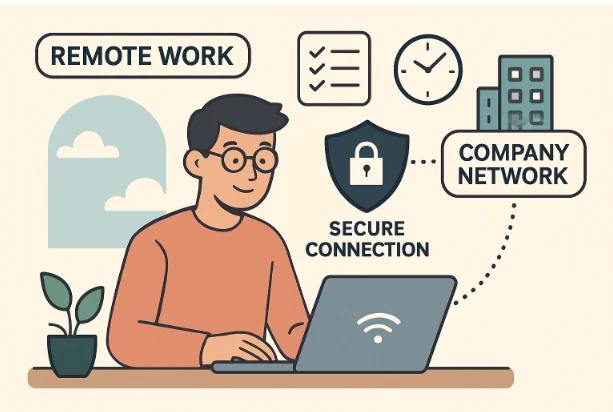
The evolution of remote work has reshaped business operations on a global scale. Most organizations are now adopting a hybrid approach, combining office and remote work hours for increased flexibility and efficiency. This transformation enables employees to work from virtually anywhere, unlocking new levels of productivity and satisfaction. With the growing reliance on remote access to corporate systems, businesses must prioritize robust, secure web gateways, such as SWG, to ensure data remains protected regardless of where work is done.
Remote work’s flexibility allows employees to balance professional commitments with personal life, leading to higher morale and increased retention. The absence of commuting also contributes to overall wellness and efficiency. Yet, these benefits come with increased reliance on digital infrastructure—a shift that makes information systems more dispersed and, if unprotected, vulnerable to new forms of cyber threats.
Productivity Gains and Challenges
Recent industry surveys indicate that remote employees often report higher productivity levels. Reduced distractions and personalized work environments fuel this boost. However, new challenges must be addressed, including longer work hours, digital fatigue, and the risk of burnout. The blurring of work-life boundaries can result in employees being ‘always on,’ leading to higher stress levels without proper support and boundaries from management.
Technical challenges persist as well—slow network speeds, limited access to critical files, and software incompatibilities can disrupt workflows. Forward-thinking organizations are leveraging secure cloud services and optimizing IT support to minimize these productivity barriers, aligning remote work benefits with business goals.
Cybersecurity Risks in Remote Work
The dispersal of a remote workforce exposes organizations to a broader range of threats. The rate of phishing attacks and targeted ransomware efforts aimed at remote employees has surged dramatically. According to recent research from Check Point Research, companies have seen a sharp uptick in data breaches linked to remote access points and unsecured home networks. VPNs, often relied upon by remote employees, can be a weak link if not correctly configured and monitored.
Furthermore, endpoints such as laptops and mobile devices may lack the robust protection of on-premises security systems, making them lucrative targets for hackers. Attackers exploit this decentralization by leveraging phishing and social engineering to gain unauthorized access to sensitive corporate data.
Strategies for Enhancing Cybersecurity
A multi-layered approach is essential for safeguarding a distributed workforce. Key strategies include:
- Regular Training: Employees should be well-versed in identifying suspicious emails and security threats.
- Secure Access Protocols: Multi-factor authentication and continuous monitoring of login activities are critical steps in reducing unauthorized access.
- Endpoint Security: It’s vital to manage and update all devices that connect to the company network. Leveraging mobile device management solutions further strengthens endpoint security.
- Data Encryption: Encrypting data at rest and in transit provides an extra layer of protection that’s especially important for distributed teams.
Ensuring that these protocols are tailored to the specific workflows and needs of remote employees creates a foundation of security without compromising performance. For additional guidance on best practices, organizations may refer to Forbes’ expert recommendations for remote cybersecurity.
Balancing Security and User Experience
Security measures that are too rigid can dampen productivity and morale. Remote workers rely on quick and seamless access to essential files and applications. Overly complex authentication processes or limited remote connectivity may lead users to seek workarounds, inadvertently creating new vulnerabilities. It’s important to design security policies that protect business resources while prioritizing user experience.
Adaptive security, which responds dynamically to user risk profiles, provides a more streamlined approach. This ensures high-risk activities receive stricter scrutiny without penalizing routine workflows, enabling employees to maintain productivity without unnecessary frustration.
Leveraging Technology for Seamless Integration
Modern cybersecurity solutions are designed to strike a balance between robust protection and high network performance. Technologies like secure access service edge (SASE) and cloud-based secure web gateway (SWG) platforms go beyond threat mitigation, ensuring reliable and optimized connectivity for remote and distributed users. By integrating real-time threat intelligence, centralized policy management, and adaptive security controls, organizations can enforce consistent protection without sacrificing speed or accessibility. These solutions enable IT teams to deliver a seamless, secure user experience across multiple locations, devices, and applications, thereby strengthening both operational efficiency and overall cyber resilience.
Example: Hybrid Work Solutions
Companies that adopt advanced network security tools have reported faster incident response times and a decrease in successful cyberattacks. These technologies enable IT teams to monitor traffic, enforce policies, and detect anomalies in real-time—key for defending distributed networks while supporting business agility.
Conclusion
Remote work has evolved from a temporary trend into a fundamental shift redefining how organizations operate and employees engage. While it offers flexibility and expanded talent pools, it also introduces unique cybersecurity challenges that demand proactive strategies. By implementing robust policies, providing ongoing employee training, and leveraging advanced cloud-based solutions, companies can maintain productivity while ensuring security. Ensuring that protective measures are seamlessly integrated into everyday workflows allows employees to work efficiently while keeping sensitive data safe. Organizations that successfully balance security and usability not only reduce risk but also strengthen operational resilience, enhance trust, and gain a strategic edge in the competitive landscape of the modern remote work environment.
