



What Makes 316 Stainless Steel Unique?
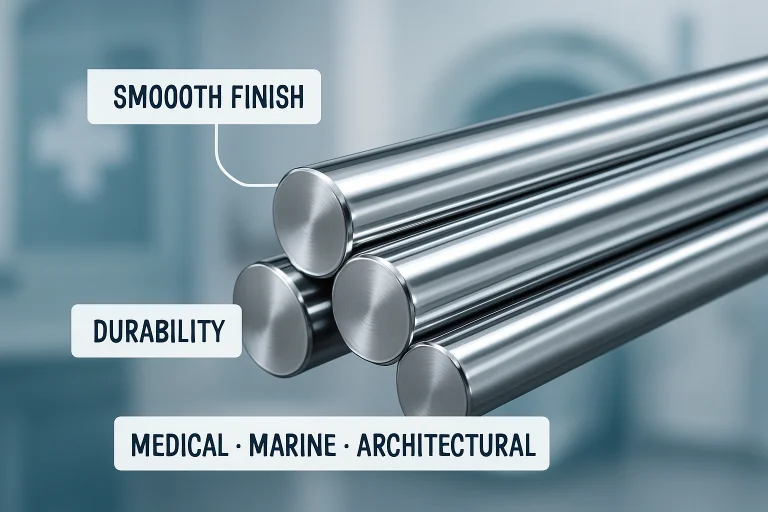
316 stainless steel stands out for its exceptional corrosion resistance, particularly in harsh environments exposed to saltwater, chemicals, or high humidity. Its composition, enriched with molybdenum, provides greater durability than standard stainless steels, making it suitable for industries where reliability is critical. From marine hardware and chemical processing equipment to food production and medical devices, 316’s ability to withstand extreme conditions ensures long service life and dependable performance.
Another critical variation, 316L stainless steel, offers similar benefits with a lower carbon content, enhancing resistance to sensitization and welding-related corrosion. This makes it an excellent option for fabrications that demand strength and cleanliness. Overall, 316 stainless steel remains a go-to choice for applications where safety, hygiene, and durability cannot be compromised, reinforcing its role as a trusted material in demanding fields.
Major Industries Using 316 Stainless Steel
316 stainless steel is widely used across various sectors due to its resilience and biocompatibility. Key industries include healthcare for medical devices and surgical tools requiring repeated sterilization. The food processing industry utilizes it for hygienic equipment and surfaces. Marine applications, such as ships and offshore platforms, depend on it for components exposed to saltwater. Its resistance to harsh conditions makes it valuable in water treatment systems and high-purity chemical processing.
Corrosion Resistance in Challenging Environments
316 stainless steel excels in the face of extreme chemical exposure, acidic conditions, and high salinity. The presence of molybdenum makes this alloy especially adept at resisting pitting and crevice corrosion—two of the most destructive corrosion mechanisms in environments such as marine installations and chemical processing facilities. By fending off chloride attack, 316 stainless steel outperforms standard grades and safeguards mission-critical infrastructure for decades.
Choosing Between 316 and 316L Variants
The choice between standard 316 and its low-carbon sibling, 316L, often hinges on the details of fabrication and usage. 316L, with its reduced carbon content, is engineered to avoid sensitization and carbide precipitation during welding. This makes it particularly advantageous for components that require repeated sterilization in the medical and food sectors, as well as for parts subjected to high heat or complex welding operations.
Emerging Applications and Innovations
Because of its chemical stability and affordability, 316 stainless steel is becoming more popular in renewable energy uses such as solar panel mounts, wind turbine parts, and hydrogen management. The alloy also works well with additive manufacturing. Advances in surface coatings and digital quality control improve its performance, while ongoing research investigates how it can work with next-generation manufacturing for sustainable results.
Tips for Selecting Stainless Steel for Your Project
- Evaluate the specific environmental exposure, considering factors like chlorides, humidity, and chemical concentrations.
- Estimate the anticipated service life and maintenance needs relevant to your intended use.
- Balance the benefits of polished versus matte finishes in terms of functional requirements and visual objectives.
- Consult industry standards, such as ASTM and ISO guidelines, and study detailed material data sheets to ensure a precise match for your application.
Conclusion
316 stainless steel remains the benchmark material for high-stakes environments—offering exceptional strength, resilience, and adaptability. It has become indispensable in sectors demanding performance and longevity, from lifesaving medical devices to the backbone of marine equipment and architectural achievements. As ongoing research and technological innovation further its potential, 316 stainless steel continues to set the standard for reliability and excellence in critical applications.
