



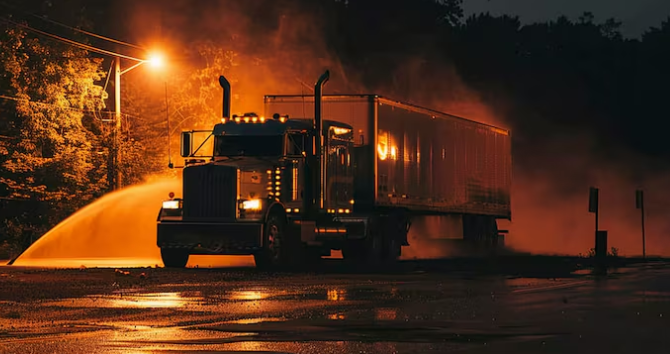
Call a heavy recovery crew before you spin the tires one more time. A loaded dump truck sitting axle deep in thawed New Stanton clay stopped being a traction problem the moment the frame touched mud. Every extra minute of wheelspin packs it in tighter, and the suction under the body doubles the pull needed to break it loose. That is why a two truck hauler calls a winch out service new stanton pa instead of borrowing a neighbor’s skid steer. The mud does not negotiate.
A Buried Axle Stops The Whole Job
One truck down is never just one truck down when you own two. The second truck inherits the deliveries the first one promised, and the crew that was supposed to be spreading stone stands around a hole instead. The customer waiting on topsoil by noon gets a phone call nobody enjoys. Job after job, what we see most often is a driver who already tried four recovery attempts on his own before anyone picked up a phone. That is how a routine pull turns into a bent crossmember.
Recovery work is also more dangerous than the average shipper pictures. A scoping review of tow truck drivers attending roadside events reported that towing and recovery occupations carry 83% of on-foot roadside deaths, the largest share of any group working the shoulder. The AAA Foundation for Traffic Safety published a Slow Down, Move Over survey in March 2026. More than 90% of drivers said they moved over or slowed down at their last encounter with a stopped vehicle, and roadside deaths kept climbing anyway. Self reported courtesy is not a safety plan.
What Recovery Looks Like Hour By Hour
Dispatch matters more than raw horsepower here. A good operator asks what you are loaded with, how far off the road surface you sit, and whether the frame is buried or only the tires. Twenty tons of wet aggregate and an empty bed need very different rigging. Within the first hour on scene the crew reads the ground rather than the truck, working out where the recovery unit can set up, whether the anchor point will hold, and whether part of the load has to come off before anything moves.
Then everyone backs off. A winch line under tension can snap and strike anything within reach, so nobody stands in the bight and nobody walks past the cable. No driver should attempt a self recovery beside live traffic instead of calling a certified operator. OSHA’s winching standard, 29 CFR 1910.266, bars moving a load until every employee is in the clear and requires operator cabs built to withstand a snapping line. Watch one cable let go from ten feet away and you understand why that rule exists.
The pull itself is often the short part of the night. On the first day the truck is out, washed down, and checked for driveline damage before it goes back on a route. An honest crew will also tell you what they could not inspect in the dark. By day two you know whether the u-joints and the hub seals survived, which is the narrow window where a small repair is still a small repair. Week two is when the ignored version of this story shows up as a weeping hub.
Calling Early Beats Digging Yourself Deeper
The cheapest recovery is the one you call for while the truck is still only stuck. Unpaid waiting already eats the margin on a hauling day. FreightWaves, reporting on ATRI research, put detention at 39.3% of all stops, with more than four hours lost in 4.9% of them. A buried truck is that same dead time plus a repair bill. What share of these sink-ins traces back to the thaw rather than an overloaded bed, I cannot tell you, and I doubt anyone counts it.
So the plan stays short. Stop spinning the tires and get everyone clear, then make the call. Keeping the number for a winch out service new stanton pa in the cab costs nothing, and PennDOT’s free 511PA site is worth a look before any early spring run onto ground that has been wet for a week. The outfit that gets pulled free by dinner is loading again the next morning.
