



Key Takeaways
- Synthetic ice surfaces are reshaping at-home ice sports by making skating and hockey more accessible and sustainable for individuals and families worldwide.
- Recent advancements ensure that modern synthetic ice feels more like real ice, benefiting both serious athletes and recreational users.
- Home installations promote skill development and activity year-round, regardless of climate or location.
Table of Contents
- Introduction
- Advancements in Synthetic Ice Technology
- Benefits of At-Home Synthetic Ice Rinks
- Installation and Maintenance Considerations
- Training and Performance on Synthetic Ice
- Environmental and Economic Impact
- Future Trends in Synthetic Ice for Home Use
- Conclusion
Introduction
For many ice sports enthusiasts, regular access to a traditional rink is challenging due to factors such as weather, travel distance, and high maintenance costs. Recent years have brought fresh solutions with innovations such as synthetic ice. This technology empowers homeowners and athletes to practice skating, hockey, or figure skating in the comfort of their own homes without the restrictions and expenses of a traditional rink.
Synthetic ice is comprised of advanced polymers engineered to mimic real ice. As interest in at-home sports grows, the popularity of these surfaces is soaring. Homeowners can enjoy both recreational and training benefits, while athletes seeking performance improvements find synthetic ice an invaluable practice platform year-round.
By overcoming seasonal, geographical, and financial barriers, synthetic ice is fundamentally changing the future of at-home ice sports. Users no longer need to rely on temporary ice sheets or costly refrigeration. Instead, a reliable and realistic alternative is now within reach for a much broader group of people.
When evaluating emerging fitness solutions, this technology has received attention from experts and the media for its impact on community health and home recreation.
Advancements in Synthetic Ice Technology
The synthetic ice industry has seen remarkable improvements in recent years. Older generations were often criticized for drag and reduced glide, which made skating noticeably different. Today, technological advancements such as high-density polyethylene and proprietary surface lubricants have enabled the production of artificial ice with dramatically lower friction. These surfaces provide an experience that closely mimics the look and feel of natural ice, allowing the users to glide smoothly and execute complex maneuvers with confidence.
Manufacturers now produce interlocking panels that snap together easily for custom setups that fit rooms, garages, or dedicated backyard rinks. Enhanced durability ensures longevity and reliability even under frequent use. Some brands offer surfaces that can withstand skate blades and puck impacts comparable to those of professional-grade rinks.
Research continues to push synthetic ice toward even greater realism. Engineers and chemists work together to refine glide technology, reduce wear on skate blades, and further simulate the unique resistance and responsiveness of frozen water. This progress fuels the global adoption of home-based, eco-friendly rinks.
Benefits of At-Home Synthetic Ice Rinks
- Year-Round Accessibility: Synthetic ice eliminates the need for cold temperatures and refrigeration. Home rinks are available any day, in any season, regardless of local climate conditions. This means athletes and enthusiasts can maintain skills even in regions without natural ice.
- Cost-Effectiveness: Eliminating the recurring costs of cooling systems, water, and intensive maintenance saves families and facility owners thousands of dollars over time. The long-term operational savings quickly recoup the initial investment in high-quality panels.
- Convenience and Flexibility: A private rink allows users to practice on their own schedules, without public rink traffic or restricted access hours. For busy families, this convenience supports better skill retention and more frequent activity.
Beyond the sports aspects, the social and health benefits are also considerable. Installing a rink at home encourages children and adults alike to stay active, practice teamwork, and develop lifelong fitness habits.
Installation and Maintenance Considerations
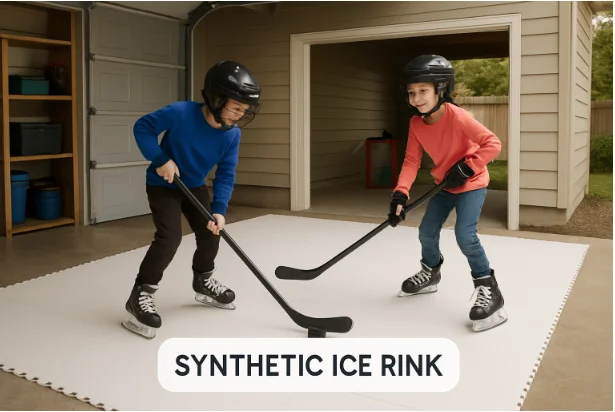
Setting up a synthetic ice rink at home begins with choosing the right space, whether it is a portion of a basement, a backyard patio, or an entire garage. Adequate planning ensures a seamless experience. Key steps include evaluating the area size, providing a flat, stable base, and selecting compatible panel systems. Modern synthetic ice is modular, making installations easy to scale up or relocate as needs change.
Maintenance is relatively simple compared to traditional rinks. Users should sweep or vacuum the surface regularly to remove dust, dirt, or grit that can inhibit glide or damage the panels. Some systems benefit from applying a specialized lubricant or glide that is further enhanced to optimize performance. Routine inspection for wear and secure panel locks is recommended to ensure years of reliable use.
Training and Performance on Synthetic Ice
Synthetic ice is now regarded as a top-tier solution for skill development and training. Skaters, hockey players, and figure skaters can rehearse skating strides, turns, puck handling, and even shooting. The slightly higher resistance compared to natural ice is believed to build additional strength in leg muscles, sometimes providing an edge when returning to conventional rinks.
Parents of young athletes appreciate the safety aspect of practicing at home in a supervised environment. Coaches and trainers are increasingly recommending synthetic ice as a supplement to traditional ice, noting minimal differences in its effect on developing coordination and technique. Consistent practice on synthetic surfaces translates into improved on-ice confidence, precision, and endurance.
Environmental and Economic Impact
The shift to synthetic ice brings significant sustainability benefits. Since these rinks require no water or energy-hungry freezing equipment, they produce far less carbon output over their lifetime. This approach aligns with the growing emphasis on greener recreation solutions and supports households and communities looking to lower their ecological footprints.
From an economic perspective, synthetic ice reduces ongoing expenses. The panels last for years with minimal upkeep, avoiding costly resurfacing, refrigeration repairs, and constant water consumption. Community centers, schools, and private clubs increasingly embrace synthetic surfaces for their economic and environmental advantages.
Future Trends in Synthetic Ice for Home Use
Emerging trends show an exciting path forward for synthetic ice. Innovations focus on even more realistic surface materials and on integrating technology, such as built-in sensors to monitor skating performance and provide instant feedback to users. These features cater mainly to competitive athletes and parents seeking advanced, data-driven training tools.
Another rising trend is personalization: manufacturers offer custom shapes, colors, and branding to match home décor or team needs. As demand expands, the technology will likely become even more affordable, modular, and widely accessible.
Experts predict that, as awareness grows and costs decrease, synthetic ice will become standard in home gyms, recreation rooms, and local athletic centers, further democratizing access to ice sports worldwide.
Conclusion
Synthetic ice surfaces are fundamentally changing how individuals and families approach at-home ice sports. These innovative panels bring skating, hockey, and figure skating within reach year-round, lowering costs and improving convenience without compromising performance. As the technology continues to evolve, it propels the future of ice sports forward, fostering sportsmanship, fitness, and fun for all skill levels at home.
