



Key Takeaways
- Self-healing shingles and innovative roofing systems help minimize maintenance and enhance roof durability.
- Cool roofing materials and solar-integrated solutions improve energy efficiency and reduce environmental impact.
- 3D-printed components and green roofs offer customizability and advanced, eco-friendly options for residential and urban settings.
Table of Contents
- Introduction
- Self-Healing Shingles
- Smart Roofing Systems
- Solar-Integrated Roofing
- Cool Roofing Materials
- 3D-Printed Roof Components
- Green Roofs
- Synthetic Roofing Materials
- Conclusion
Introduction
As advancements in construction materials and innovative technologies accelerate, homeowners and contractors are turning to innovative roofing solutions to enhance modern homes’ durability, energy efficiency, and sustainability. Cutting-edge technologies like self-healing shingles, solar-integrated options, and green roof systems define today’s roofing industry. Companies like Engroofers.com are at the forefront of helping property owners select the best solutions tailored to their needs and climate.
Roofing is no longer just about protection from the elements—modern systems now deliver extended longevity, increased energy savings, and strong contributions to environmental sustainability. Whether integrating smart sensors or choosing materials that reflect more sunlight, homeowners can now make choices that directly impact their comfort, utility bills, and ecological footprint.
The following guide provides a comprehensive look at the roofing innovations revolutionizing shelter and building envelope performance. From eco-friendly materials to digital monitoring, the options available today meet the diverse needs of urban and rural homeowners.
Exploring these advanced roofing systems offers significant long-term benefits. These modern solutions empower homeowners to future-proof their homes and reduce their environmental impact by addressing concerns like maintenance, energy loss, and weather resiliency. For further reading on sustainable housing trends, refer to this Architectural Digest resource.
Self-Healing Shingles
Incorporating the latest chemistry and materials science, self-healing shingles transform roof maintenance. These innovative shingles use thermoplastic additives that react to heat and sunlight, effectively “healing” minor abrasions, scuffs, and cracks as they develop. This process diminishes the likelihood of leaks and other damage propagating over time, extending the functional life span of the roof. Manufacturers like F-Wave have pioneered synthetic roofing shingles that withstand intense weather and UV exposure, setting new standards for resiliency and performance.
Smart Roofing Systems
Roofing is getting smarter with integrating sensors, Internet-of-Things (IoT) devices, and cloud connectivity. Modern smart roofing systems offer real-time monitoring of factors such as moisture intrusion, temperature changes, and structural shifts. Homeowners and property managers receive instant alerts about potential leaks, insulation failure, or structural issues—helping prevent water damage and costly repairs. Many systems also pair with broader home automation networks, enabling energy optimization based on weather forecasts and seasonality. According to a recent Forbes article, seamless connectivity is becoming increasingly standard in new home construction.
Solar-Integrated Roofing
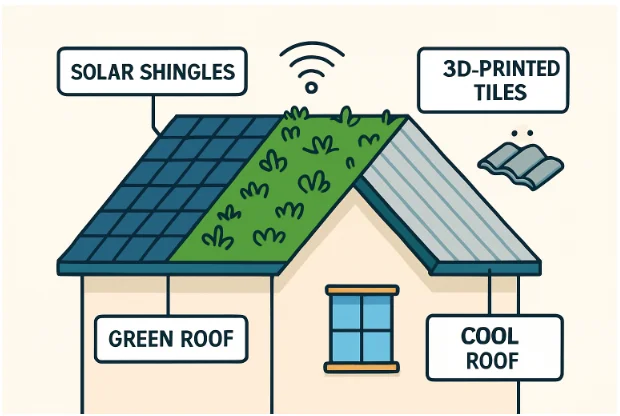
The convergence of solar technology with traditional roofing materials has produced solar-integrated shingles that serve as roof covering and on-site energy generation. Unlike conventional solar panels, solar shingles—such as those developed by GAF—are designed to blend with the roof’s aesthetic. These shingles are installed in place of standard roofing materials, delivering electricity without the bulk of rack-mounted solar arrays. This innovation removes a barrier to residential solar upgrades, making it easier for homeowners to contribute to clean energy goals while preserving their home’s curb appeal.
Cool Roofing Materials
Cool roofing materials have gained market share with increasing attention to climate impacts and rising summer temperatures. These materials are engineered with highly reflective surfaces that minimize heat absorption, reducing building cooling loads. Reflective shingles, coatings, and tiles are designed to meet or exceed stringent local building codes for energy efficiency. Solutions like Brava’s Cool Roof Tiles are built for high solar reflectivity and thermal emission, helping homes stay cooler naturally and reducing reliance on air conditioning during peak months.
3D-Printed Roof Components
3D printing is a game-changer in custom roof construction, offering precision fabrication of roof tiles, flashing, and structural elements. Tailoring components to a building’s specific dimensions minimizes material wastage and speeds up installation. This bespoke approach reduces the margin for error in complex architectural designs and supports rapid deployment for new construction and renovation. The ability to quickly prototype and test solutions before final installation is especially beneficial for unique or architecturally challenging projects.
Green Roofs
Green roofs transform urban rooftops into living landscapes, providing substantial ecological and practical benefits. These systems involve layering vegetation atop waterproof membranes, sometimes alongside water management and irrigation components. Green roofs offer enhanced insulation, mitigate urban heat islands, improve local air quality, and control stormwater runoff. They are a cornerstone technology in sustainable urban planning, requiring investment in upfront design and ongoing maintenance, but representing a shift toward eco-friendly living even in dense city environments.
Synthetic Roofing Materials
Thanks to modern composites, homeowners now enjoy durable roofing materials with the appearance of wood, slate, or tile, yet without the drawbacks. Synthetic roofing materials like polymer or composite shingles combine high weather resistance, light weight, and fire safety. Many of these products are recyclable, reducing the lifecycle environmental impact of roofing projects. Homeowners benefit from various styles, colors, and finishes, often accompanied by industry-leading warranties for peace of mind and lasting value.
Conclusion
As shown in the advancements above, today’s roofing solutions offer more than just weather protection; they enable longer roof life, lower energy bills, and a more sustainable footprint. Homeowners can enjoy modernized comfort, efficiency, and eco-friendliness by integrating innovations such as self-healing shingles, intelligent monitoring, and solar integration.
