



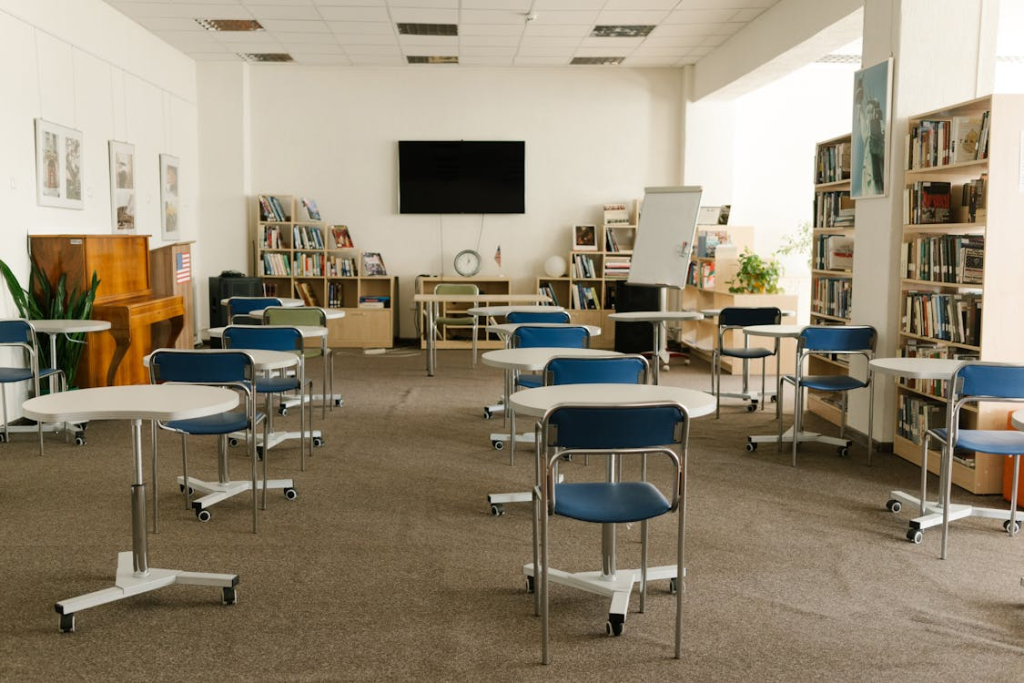
Do you know how to get kids to perform better?
It’s not rocket science. The answer is right beneath them…on the ground. Picking classroom chairs and seating that is properly fitted to students changes the way they learn.
Here’s the problem:
Over 83% of school children sit at chair/desk combinations that are too tall for them. (Pause and let that number sink in.)
That mismatch is creating a big problem in classrooms across the world.
The good news?
Ergonomic classroom chairs are the answer. Properly fitted chairs promote good posture, improve concentration and keep kids comfortable for hours of instruction.
Here’s what we’ll cover:
- Why Ergonomic Seating is Important for Students
- The Link Between Comfort and Concentration
- Important Features to Look For
- How to Select the Right Chairs for Your Classroom
Why Ergonomic Seating is Important for Students
Think about the average student…
Kids spend hours and hours sitting in classrooms each and every day.
If those chairs are the wrong size, then physical problems start to develop. Backaches. Fidgeting. Lack of focus. It all adds up.
Picture it this way…
A chair that’s too tall means feet have to hang in the air. A chair that’s too low causes weird contorting to hunch over. Neither is conducive to effective learning.
Which is why investing in quality classroom chairs can make such a difference. The right seating supports the human body and keeps students attentive on what matters most – education.
In fact, studies have found that students who sat incorrectly had 2.49 times the probability of developing low back pain. That’s a serious issue for young people who are still growing.
The right seating isn’t just a comfort thing. It’s a health thing.
The Link Between Comfort and Concentration
Here’s something that most people don’t realise…
Physical discomfort directly affects a student’s ability to concentrate. When children are fidgeting around trying to get comfortable, they are not listening to what the teacher is saying.
Students with furniture that fits them properly stayed focused approximately 37% longer than those with ill-fitting chairs and desks. This is a very significant increase in attention span.
Impressive, isn’t it?
But the science behind it is simple. The human body, when properly supported, allows the mind to focus its energy on learning instead of fighting to try to stay comfortable.
Ergonomic chairs accomplish this by:
- Supporting the natural curve of the spine
- Positioning feet flat on the ground
- Angling hips and knees at comfortable degrees
- Minimising pressure points that create discomfort and fidgeting
In one study with 2,000 students in Minnesota, researchers found a strong connection between ergonomic school furniture and academic performance. In fact, teachers said they noticed a boost in behaviour and focus when using proper seating.
Key Features to Look For
All classroom chairs aren’t made the same.
When choosing classroom chairs and seating for school kids, certain features will make a world of difference in the difference between good and great.
Adjustable Height
Students come in many different shapes and sizes. Even kids in the same year group have significant height differences.
Adjustable chairs are the perfect solution. They allow every seat to be adjusted to fit the individual student and help to ensure proper posture for all body types.
It’s all about the 90-degree rule here.
Knees should form right angles when sitting correctly. Feet should be flat on the floor. Hips should be level with or slightly above the knees.
Lumbar Support
The lower back takes a beating during long periods of sitting.
Chairs with built-in lumbar support encourage the spine to retain its natural curve. This minimises strain and prevents the slouching that causes discomfort and distraction.
Good lumbar support also promotes better breathing. Sitting upright gives the diaphragm space to expand fully. This increases the flow of oxygen to the brain – which directly supports concentration.
Durable Materials
Classroom furniture is subject to daily wear and tear.
Backpacks get flung haphazardly on chairs. Drinks spill. Chairs get dragged across floors constantly. The materials need to be able to handle all of that abuse.
Look for chairs with:
- Moisture-resistant upholstery
- Frames that are scratch-resistant
- Easy-to-clean surfaces
- Sturdy construction that’s rated for extended use
Quality materials last longer. That means schools save money in the long-term by not having to replace cheap, shoddy furniture every few years.
Movement-Friendly Design
Here’s a fun trend in classroom seating…
Modern ergonomic chairs often allow for small movements. Gentle rocking or swivelling allows students to release energy without being disruptive.
This design recognises that children aren’t meant to sit perfectly still. In fact, a little bit of movement actually helps to maintain focus instead of killing it.
How to Choose the Right Chairs for Your Classroom
There’s some thought that needs to go into making the best selection.
Begin by considering the age group. Students from primary school with IB curriculum require different seat heights than secondary school students. Getting this basic measure right eliminates most common issues.
Measure twice and order once.
Measure students if possible. The range of heights and builds within year groups can be surprising.
Consider also the types of activities.
Will students be writing at desks? Typing on computers? Collaborating in groups? Different activities may be best supported by different seating solutions.
Budget is a factor too. Ergonomic chairs cost more up front, but the investment is well worth it. Lowered health complaints, increased focus, and better academic performance all result in real value.
Longevity is also important. Quality ergonomic furniture lasts significantly longer than budget or disposable alternatives. When you factor in durability, the cost-per-year often works out lower.
Test the options before you commit, if possible. Many suppliers offer trial periods or sample chairs. Take advantage of those opportunities to see how students react.
Finally, include teachers in the decision-making process. They are the ones who see how students interact with furniture every day. Teachers’ input can be invaluable for making the best decisions.
Bringing It All Together
Ergonomic classroom chairs are not a luxury. They are a necessity for creating environments where effective learning can take place.
Here’s the kicker…
The research is indisputable. Proper seating supports the physical body, it improves concentration, and it contributes to better academic results. Students can’t do their best work when they are fighting uncomfortable chairs.
Schools that prioritise ergonomic seating are sending a clear message. They care about the wellbeing of students and about educational success.
The choice of classroom chairs might seem like a small detail. But as the science shows, it actually has huge implications for the way students learn and develop.
Make the smart choice. Choose seating that supports students in all possible ways.
